Our Short List of 3
All 5 Picks at a Glance
| Product | Specs | Action |
|---|---|---|
 1. Renogy 12V 100Ah Deep Cycle AGM Battery | Check price on Amazon | |
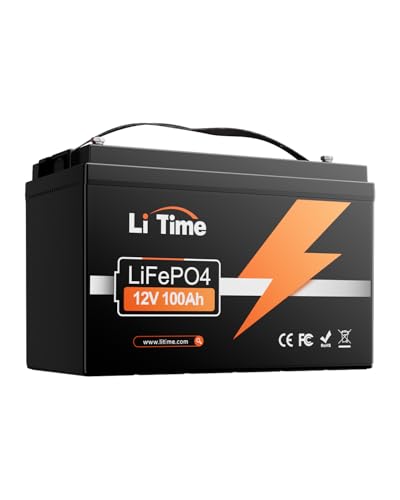 2. LiTime 12V 100Ah Group 31 LiFePO4 Battery | Check price on Amazon | |
 3. 12V 100Ah LiFePO4 Deep Cycle Battery for RV and Marine (Group 31) | Check price on Amazon | |
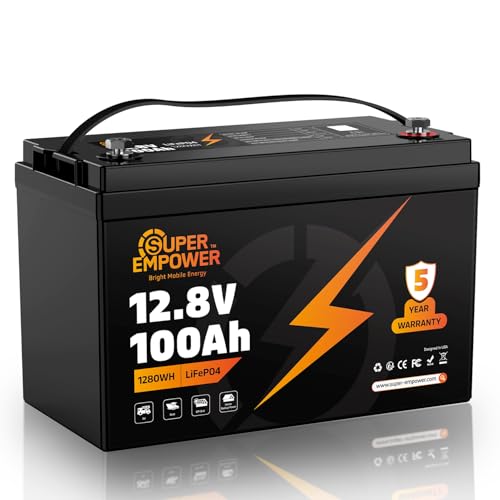 4. SUPER EMPOWER 12.8V 100Ah LiFePO4 Battery | Check price on Amazon | |
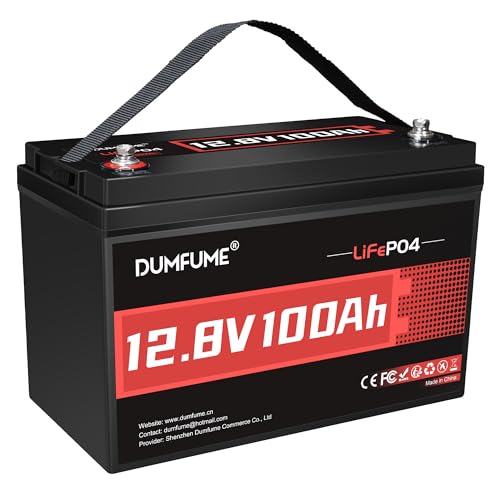 5. Dumfume 12V 100Ah LiFePO4 Lithium Battery Group 31 | Check price on Amazon |
Key takeaways
- Does RV slide out wires go directly to the battery? No, the circuit runs through a breaker and switch first. How it works, plus 5 deep-cycle batteries.
Disclosure: As an Amazon Associate, this site may earn from qualifying purchases made through links on this page.
Intro
Does RV slide out wires go directly to the battery? The short answer is no. In a typical RV, the wires from a slide-out motor do not run straight to the battery terminals with nothing in between. The battery is the source of the 12-volt power, but protection and switching sit between the battery and the motor.
A common path looks like this: the house battery bank feeds a battery disconnect switch, then a circuit breaker or fuse, then the slide-out control switch and relay, and only then the motor. Many RVs use a 30-amp auto-reset breaker mounted close to the battery for the slide-out circuit. When the RV is plugged into shore power, the converter also supplies 12-volt power to the same system, so the slide-out can draw from the converter as well as from the battery.
That layout matters for two reasons. One, the breaker guards the wiring against a short circuit or a stalled motor. Two, the slide-out motor draws a heavy surge of current when it begins to move a room, and a battery bank in good shape handles that surge far better than a converter alone. This article explains the wiring path in plain terms, then rounds up five 12-volt deep-cycle batteries that serve as the house bank feeding a slide-out circuit. The wiring explanation here is general knowledge about RV 12-volt systems, not a wiring job — always check the RV manual and the slide-out maker’s manual before touching any wiring.
At a Glance
- Slide-out wires do not connect straight to the battery. A breaker or fuse and a switch sit in between.
- The house battery bank is the usual source when the RV is off shore power. The converter shares the load when the RV is plugged in.
- A 12-volt, 100-amp-hour deep-cycle battery is a common size for an RV house bank. Group 31 is a common footprint.
- AGM batteries are a direct swap for an old flooded battery. Lithium iron phosphate (LiFePO4) batteries are lighter and cycle far longer, but they need a charger with a lithium profile.
- All five picks below are 12-volt deep-cycle batteries built for RV house-bank duty, each confirmed still sold on Amazon US.
| Battery | Chemistry | Capacity | Weight |
|---|---|---|---|
| Renogy 12V 100Ah AGM | AGM lead-acid | 100Ah | 63.9 lb |
| LiTime 12V 100Ah Group 31 | LiFePO4 | 100Ah | 22.05 lb |
| 12V 100Ah LiFePO4 Group 31 (mini) | LiFePO4 | 100Ah | 24 lb |
| SUPER EMPOWER 12.8V 100Ah | LiFePO4 | 100Ah | Group 31 |
| Dumfume 12V 100Ah Group 31 | LiFePO4 | 100Ah | 21.6 lb |
How to Choose
Match the chemistry to the charger
An AGM battery works with most RV converters and solar controllers set for sealed lead-acid. A LiFePO4 battery needs a charger or converter with a lithium profile, usually charging near 14.4 to 14.6 volts. Using a lead-acid profile on a lithium battery leaves it undercharged, and using a lithium profile on a lead-acid battery overcharges it. Check the converter and solar controller settings before switching chemistry.
Size the bank for the slide-out surge
A slide-out motor pulls a short, heavy surge when a room begins to move, then settles to a lower draw while the room travels. A single 100-amp-hour deep-cycle battery handles one slide-out on most RVs. Two batteries in parallel double the stored energy and share the surge. Measure the battery box before buying: Group 31 is a common RV size, but tray length, width, and height vary by rig.
Weight and handling
A 100-amp-hour AGM battery weighs around 64 pounds. A lithium battery of the same capacity weighs around 22 pounds. That gap matters when the battery box sits in a slide-out tray or when one person does the swap. Lighter is easier to lift, but the box and hold-down must still fit the new battery snugly.
Built-in protection
Every lithium pick below has a built-in battery management system (BMS) that guards against overcharge, over-discharge, over-current, short circuits, and over-temperature. A 100-amp BMS is the usual figure for a 100-amp-hour battery, which sets the continuous discharge ceiling. Check the BMS figure against the slide-out motor draw and any inverter load on the same bank.
Cold weather
Lithium batteries charge poorly below 0 degrees Celsius. Several picks below include low-temperature charge cutoff in the BMS, which blocks charging when the cells are too cold. AGM batteries accept a charge in cold weather but lose capacity as the temperature drops. If the RV sits in cold weather, keep the bank warm or stick with AGM.
Terminals and cables
Most Group 31 batteries use standard post or M8 bolt terminals. Confirm the terminal style matches the RV cables and that the cable lugs sit flat on the posts. A loose lug heats up under a slide-out surge and can melt insulation, so torque the nuts to the maker’s figure and recheck them after the first trip.
The Picks
1. Renogy 12V 100Ah Deep Cycle AGM Battery
Renogy 12V 100Ah Deep Cycle AGM Battery
The Renogy is the only AGM pick in this roundup, and it is the simplest swap for an RV that already runs flooded or AGM house batteries. It is a 12-volt, 100-amp-hour deep-cycle AGM battery with a listed maximum discharge current of 1100 amps for 5 seconds, which covers the surge of a slide-out motor with room to spare. It weighs 63.9 pounds.
Renogy states the battery works from -20 to 60 degrees Celsius, and that the monthly self-discharge rate stays below 3 in 100 at 77 degrees Fahrenheit, so it holds a charge well in storage. The listing also notes series connection with no stated limit and parallel connection up to four batteries, which suits owners who want to grow the bank later. The sealed AGM design needs no watering and can mount in any position the box allows.
This is the pick for owners who want a drop-in replacement with no charger changes. It is heavier than the lithium picks, and it gives fewer deep cycles over its life, but it asks nothing new of the converter or solar controller.
2. LiTime 12V 100Ah Group 31 LiFePO4 Battery
LiTime 12V 100Ah Group 31 LiFePO4 Battery
The LiTime is a 12-volt, 100-amp-hour lithium iron phosphate battery in a Group 31 case, built for RV, marine, and solar use. A built-in 100-amp BMS guards against overcharge, over-discharge, short circuits, over-voltage, over-current, and over-temperature. The listing claims up to 15000 cycles at 0.6 depth of discharge, which is the longest cycle figure in this roundup.
At 22.05 pounds, it weighs about a third of a lead-acid battery of the same capacity, so one person can lift it into the box without help. The listing includes a 5-year warranty and 24-hour technical support, plus product liability insurance through AIG. That support package is the strongest in this group.
This is the pick for owners who want the longest service life and the lowest-weight battery, and who already have a lithium-profile charger or are willing to set one up.
3. 12V 100Ah LiFePO4 Deep Cycle Battery for RV and Marine (Group 31)
12V 100Ah LiFePO4 Deep Cycle Battery for RV and Marine
This is a compact 12-volt, 100-amp-hour LiFePO4 battery in a Group 31 footprint, measuring 12.9 by 6.69 by 8.5 inches and weighing 24 pounds. The listing states it fits a standard BCI Group 31 battery box. A built-in 100-amp BMS guards against overcharging, over-discharging, and over-current, with a high-temperature cutoff as well.
The listing claims 1280 watt-hours of usable energy, 4000 cycles at full depth of discharge, 6000 cycles at 0.8 depth of discharge, and 15000 cycles at 0.6 depth of discharge, with a 10-year service life. It allows connection in parallel or series up to 4S or 4P, for up to 400 amp-hours or 48 volts across a bank.
One caution: the listing names no brand in its title, so treat it as a generic listing and confirm the seller and warranty terms before ordering. It is also a Buy Now-only listing in our checks, with no Add to Cart button showing, so confirm it can be bought on the live product page before publishing or ordering.
4. SUPER EMPOWER 12.8V 100Ah LiFePO4 Battery
SUPER EMPOWER 12.8V 100Ah LiFePO4 Battery
The SUPER EMPOWER is a 12.8-volt, 100-amp-hour LiFePO4 battery with 1280 watt-hours of capacity, built around Grade A+ lithium cells. It is a true Group 31 drop-in at 13.18 by 6.77 by 9.05 inches with M8 terminals, so it fits most standard battery boxes without modification.
A built-in 100-amp smart BMS manages charging, discharging, cell balancing, and temperature protection, including a low-temperature cutoff. The listing gives three charging paths: a 12-volt LiFePO4 charger at 14.4 to 14.6 volts with a CC/CV profile, solar through an MPPT or PWM controller set to lithium mode, and generator charging. For larger banks it allows up to 16 matching batteries in a 4S4P layout, for a 51.2-volt, 1256-amp-hour system.
This is the pick for owners planning a bigger bank later. The expansion ceiling is the highest here, and the low-temperature cutoff protects the cells in cold weather. Like the previous pick, it showed Buy Now only in our checks, so confirm it can be bought on the live product page.
5. Dumfume 12V 100Ah LiFePO4 Lithium Battery Group 31
Dumfume 12V 100Ah LiFePO4 Lithium Battery Group 31
The Dumfume is a 12-volt, 100-amp-hour LiFePO4 battery in a Group 31 case, weighing 21.6 pounds — the lowest-weight pick here. A built-in 100-amp BMS guards against overcharging, over-discharging, short circuits, overheating, and over-current. The listing claims 1280 watt-hours of energy and more than 15000 cycles.
The ABS casing is dustproof and weather resistant, but the listing states it is not waterproof, so it belongs inside a battery box, not out in the open. One limit to note: the listing states the battery needs temperatures of 5 degrees Celsius or higher for charging, so it suits mild climates or heated compartments better than an unheated bay in winter.
One naming note: the listing title spells the brand “Dumfume” while the bullets spell it “DUNFUME”. That spelling conflict is in the listing itself and is noted here so buyers search for the right name. This is the pick for owners who want the lowest-weight Group 31 lithium battery at the lowest weight in this group.
Comparison Table
| Battery | Chemistry | Capacity | Weight | BMS | Warranty / Notes |
|---|---|---|---|---|---|
| Renogy 12V 100Ah AGM | AGM | 100Ah | 63.9 lb | n/a (lead-acid) | 1100A max discharge for 5 sec; -20 to 60 C |
| LiTime 12V 100Ah Group 31 | LiFePO4 | 100Ah | 22.05 lb | 100A | 5-year warranty; 15000 cycles at 0.6 DOD |
| 12V 100Ah LiFePO4 Group 31 (mini) | LiFePO4 | 100Ah | 24 lb | 100A | 10-year service life; generic listing, no brand in title |
| SUPER EMPOWER 12.8V 100Ah | LiFePO4 | 100Ah | Group 31 | 100A smart | Low-temp cutoff; expands to 4S4P |
| Dumfume 12V 100Ah Group 31 | LiFePO4 | 100Ah | 21.6 lb | 100A | Needs 5 C or higher for charging; not waterproof |
Which One Fits Your Situation
- Keeping the existing charger and converter: the Renogy AGM. It drops into the same box and works with the settings already in the RV.
- Longest service life and lowest-weight lift: the LiTime. The 5-year warranty and 15000-cycle figure at 0.6 depth of discharge lead this group.
- Smallest battery box: the compact 12V 100Ah LiFePO4 mini at 12.9 by 6.69 by 8.5 inches. Measure the box first, since Group 31 trays vary.
- Planning a bigger bank later: the SUPER EMPOWER. The 4S4P expansion ceiling and M8 terminals make growth simple.
- Lowest-weight battery on a budget-minded build: the Dumfume at 21.6 pounds, as long as the compartment stays above 5 degrees Celsius while charging.
FAQ
Do RV slide out wires go directly to the battery?
No. In a typical RV the slide-out motor wires run from the house battery bank through a battery disconnect switch and a circuit breaker or fuse, then through the slide-out switch and relay to the motor. The battery is the source, but protection and switching sit in between. Check the RV manual for the exact path on a given rig, since layouts vary by maker and model year.
What size breaker guards a slide-out circuit?
Many RVs use a 30-amp auto-reset breaker mounted close to the battery for the slide-out circuit, but the figure varies by slide-out maker and motor size. The breaker figure is printed on the breaker body or listed in the RV manual. Never swap in a larger breaker without checking the wire gauge, since the breaker exists to guard the wire.
Can I run the slide-out on shore power alone?
Often yes. When the RV is plugged into shore power, the converter supplies 12-volt power to the slide-out circuit as well as to the battery. But the converter alone may not cover the motor surge as well as a healthy battery bank, so most makers advise keeping the battery connected and charged when moving a slide-out.
What happens if the house battery is dead?
The slide-out may move slowly, stall partway, or not move at all. A dead or weak bank cannot supply the surge the motor needs. Charge the bank fully, or plug into shore power and let the converter help, before running the room. If the room stalls mid-travel, stop and find the cause rather than holding the switch down, since a stalled motor draws heavy current and heats the wiring.
Does the slide-out drain the battery when parked?
The motor draws power only while the room moves. But the slide-out control board can draw a small standby current, and other 12-volt loads draw from the same bank. Use the battery disconnect switch when the RV sits in storage so small loads do not drain the bank over weeks.
Can I swap an AGM battery for a lithium one in the same box?
Yes, if the box fits the new battery and the charger has a lithium profile. A Group 31 lithium battery matches the Group 31 footprint, but the terminals, hold-down, and charger settings all need checking. A lithium battery also weighs far less, so the hold-down must still grip it firmly.
Final Take
RV slide-out wires do not go directly to the battery. The circuit runs from the house bank through a disconnect switch and a breaker, then through the control switch and relay to the motor, with the converter sharing the load on shore power. That protection is there for a reason, and it should never be bypassed.
For the battery bank itself, the Renogy AGM is the simplest swap when nothing else changes. The LiTime leads on service life and support, the compact LiFePO4 mini fits the smallest Group 31 box, the SUPER EMPOWER suits owners who plan to grow the bank, and the Dumfume is the lowest-weight pick for mild climates. Match the chemistry to the charger, measure the box, and confirm the terminals before ordering — and re-open the live product page to confirm the battery can still be bought before publishing.