Our Short List of 3

- Specs:
- Dimensions: 96 x 24 x 17 in (8 x 2 ft footprint, 17 in tall)
- Material: VZ 2.0 zinc-, magnesium- and aluminum-coated steel with AkzoNobel paint, powder-coated finish
- Panels: Vego states 0.6 mm panel thickness; 304 stainless steel fasteners, 72 pieces in kit
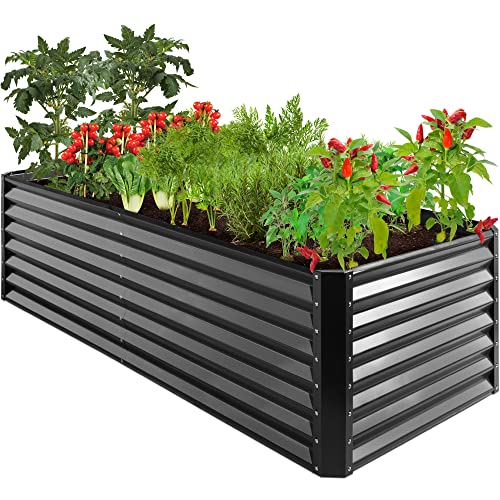
- Specs:
- Dimensions: 96 x 48 x 24 in (8 x 4 ft footprint, 24 in / 2 ft deep)
- Material: powder-coated galvanized / alloy steel panels; rubber edging on top edges
- Capacity: 64 cu ft / up to 478 gallons of soil (Amazon listing figure)
- Specs:
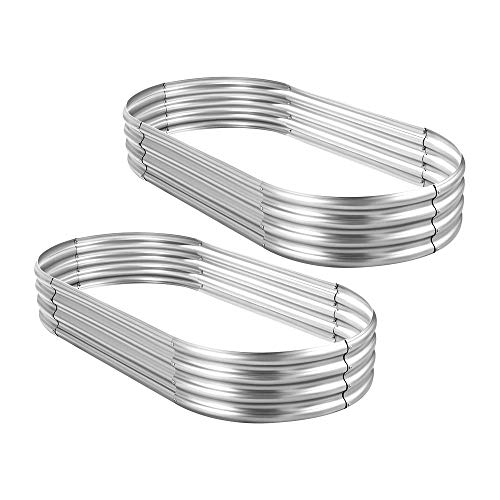
- Dimensions: 96 x 48 x 12 in per bed (8 x 4 ft, 12 in deep); 2 beds in the pack
- Material: Q195 galvanized metal sheet, double-layer galvanized finish; oval shape with wave / corrugated structure
- Capacity: 28.56 cu ft per bed, 57.12 cu ft total for the 2-pack (Amazon listing figure)
All 5 Picks at a Glance
| Product | Specs | Action |
|---|---|---|
| Vego Garden 17″ Tall 9-in-1 Modular Metal Raised Garden Bed |
| Check price on Amazon |
| Best Choice Products 8x4x2ft Outdoor Metal Raised Garden Bed |
| Check price on Amazon |
| Land Guard 2-Pack 8 x 4 x 1 ft Galvanized Steel Raised Garden Bed |
| Check price on Amazon |
 Greenes Fence Premium Cedar Raised Garden Bed, 4′ x 12′ x 7–10.5″ |
| Check price on Amazon |
 Yaheetech 8x2ft Wooden Horticulture Raised Garden Bed |
| Check price on Amazon |
Key takeaways
- Compare five ground-level raised garden beds in wood and metal by depth, footprint and build, and find the right bed for your vegetables and herbs.
The best raised garden bed for most gardeners is a ground-level metal kit around 17 inches deep, because it holds enough soil for tomatoes and root crops while keeping the frame simple and durable. If you grow mainly herbs and shallow-rooted vegetables, a 12-inch galvanized bed costs less and still works well, while untreated cedar suits gardeners who want natural wood with no chemicals. The five beds below are all open-bottom framed kits that sit directly on the ground, chosen from Amazon listings by depth, footprint and build.
This guide is for three kinds of buyers: vegetable growers planning a serious food bed, beginners who want a cheap first bed along a fence, and gardeners replacing a rotted wooden frame with metal. Each pick comes from its Amazon listing title and specifications, with dimensions given first because soil-volume figures often disagree between sources.
Quick Picks
As an Amazon Associate we earn from qualifying purchases
| Product | Best for | Key spec from title |
|---|---|---|
| Vego Garden 17″ 9-in-1 | A reconfigurable premium bed | 17 in tall, 9 layouts, 96 x 24 in |
| Best Choice Products 8x4x2ft | The deepest bed for root crops | 24 in deep, 96 x 48 in, tool-free assembly |
| Land Guard 2-Pack 8x4x1ft | The most growing area for the money | Two 96 x 48 in oval beds, 12 in deep |
| Greenes Fence Cedar 4×12 | A natural untreated wood bed | 48 x 144 in, 3/4 in cedar boards |
| Yaheetech 8x2ft Wooden | A narrow bed for fences and patios | 95 x 25 x 11 in, removable divider |
How to Choose
Match the depth to what you grow
Depth is the first decision, because it decides which crops can grow at all. Twelve inches is enough for lettuce, herbs, radishes and most flowers, which is why the Land Guard two-pack works as a starter set. Seventeen inches opens the door to peppers, bush beans and shorter carrots, and that is where the Vego kit earns its place. Twenty-four inches, the Best Choice bed, handles tomatoes, potatoes and broccoli with room for roots to run. Buying deeper than your crops need only means buying more soil, so start from the longest roots on your planting list and pick the shallowest bed that still fits them.
Choose metal or wood for your climate and lifespan
Metal and wood fail in different ways, so the choice is really about how long you want the bed to last. Powder-coated galvanized steel resists rot and insects, but it can get hot in direct sun and thin panels can flex before the bed is filled. Cedar weathers gracefully and never needs treatment, yet even good cedar eventually deteriorates after many seasons outdoors. Fir is cheaper than cedar but thinner and shorter-lived, so it suits a first bed rather than a permanent one. If your summers are long and hot, wood stays cooler to the touch; if your winters are wet, metal outlasts untreated softwood.
Measure the footprint and the soil it needs
A raised bed’s footprint decides both where it fits and how much soil you must buy, and the soil often costs more than the frame. An 8 x 4 ft bed sounds modest until you multiply length by width by depth and realise it swallows dozens of cubic feet of fill. Measure the flat space first, leave room to walk and kneel around all sides, and remember that a 4 x 12 ft cedar bed needs a very large level patch of ground. Check the dimensions on the listing rather than the name, since names round up and some beds measure differently once assembled.
Check assembly, edges and what is not included
Assembly varies more than buyers expect, and none of these five kits includes a liner or a bottom panel. The Best Choice bed is genuinely tool-free with wingnut bolts, while the Vego kit bolts together with its included fasteners and tools, the Greenes bed needs a screwdriver for its decorative tops, and the Yaheetech panels fix with screws. Look for edge protection too: the Vego and Best Choice kits include rubber edging on the top rims, while the Land Guard listing names none, so gloves are wise during assembly. Plan to add landscape fabric or cardboard yourself if you want a weed barrier underneath.
The 5 Best Options
Vego Garden 17″ Tall 9-in-1 Modular Metal Raised Garden Bed
- Specs:
- Dimensions: 96 x 24 x 17 in (8 x 2 ft footprint, 17 in tall)
- Material: VZ 2.0 zinc-, magnesium- and aluminum-coated steel with AkzoNobel paint, powder-coated finish
- Panels: Vego states 0.6 mm panel thickness; 304 stainless steel fasteners, 72 pieces in kit
The Vego 9-in-1 is the most flexible bed in this guide, because one kit rearranges into nine different shapes, from a small square to a long 8 x 2 ft run. Its 17-inch depth suits tomatoes, peppers and root crops without demanding the huge soil volume of a two-foot-deep bed, and the coated steel frame with stainless fasteners is built to last many seasons. This is the pick for a gardener who wants one premium bed and may want to change its shape later.
Best Choice Products 8x4x2ft Outdoor Metal Raised Garden Bed
- Specs:
- Dimensions: 96 x 48 x 24 in (8 x 4 ft footprint, 24 in / 2 ft deep)
- Material: powder-coated galvanized / alloy steel panels; rubber edging on top edges
- Capacity: 64 cu ft / up to 478 gallons of soil (Amazon listing figure)
The Best Choice bed is the deepest in this guide at a full 24 inches, which makes it the natural pick for deep-rooted vegetables like tomatoes, potatoes and broccoli. Its 8 x 4 ft footprint gives a wide planting area, three support rods hold the long sides steady, and the wingnut-bolt assembly needs no tools at all. The listing states non-toxic materials tested to FHSA standards with PFAS screening and California Proposition 65 compliance, though that is the listing’s claim rather than a food-safe certification.
Land Guard 2-Pack 8 x 4 x 1 ft Galvanized Steel Raised Garden Bed
- Specs:
- Dimensions: 96 x 48 x 12 in per bed (8 x 4 ft, 12 in deep); 2 beds in the pack
- Material: Q195 galvanized metal sheet, double-layer galvanized finish; oval shape with wave / corrugated structure
- Capacity: 28.56 cu ft per bed, 57.12 cu ft total for the 2-pack (Amazon listing figure)
The Land Guard two-pack gives the most growing area for the money here, with two full 8 x 4 ft beds in a single purchase. Both beds are oval, with rounded ends and a corrugated structure, and each one is 12 inches deep, which suits shallow-rooted vegetables, herbs and flowers. This is a budget pick for gardeners who want to cover a large patch of ground quickly rather than invest in one premium bed.
Greenes Fence Premium Cedar Raised Garden Bed, 4′ x 12′ x 7–10.5″
- Specs:
- Dimensions: 48 x 144 x 10.5 in (4 x 12 ft); height 7–10.5 in because the kit stacks to 2 levels
- Material: untreated North American cedar, unfinished; chemical-free / never treated with chemicals (Amazon listing)
- Board thickness: 3/4 in per the title
The Greenes cedar bed is the natural-wood pick in this guide, made in the USA from untreated North American cedar that the listing says is never treated with chemicals. Its 4 x 12 ft footprint is the largest single bed here, and the kit stacks to two levels, so it stands about 7 inches high with one board and 10.5 inches with two. Dovetail slide-in joints and square corner posts make assembly simple, and the bed expands with other Greenes kits.
Yaheetech 8x2ft Wooden Horticulture Raised Garden Bed
- Specs:
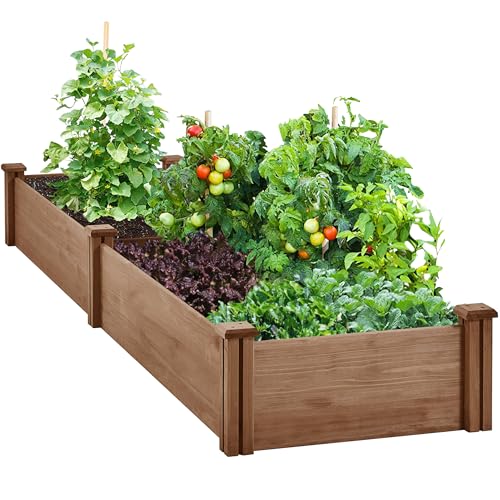
- Dimensions: 95 x 25 x 11 in (8 x 2 ft, 11 in deep)
- Inner growing space: 46.3 x 21 x 9 in per half (two halves)
- Material: fir wood, solid wood without painting; sanded smooth, no splinters stated
The Yaheetech bed is a long, narrow wooden frame that fits neatly along a fence or patio edge, where a wide bed would waste space. A removable centre divider splits it into two growing areas or lifts out to merge it into one long bed, so two crops with different watering needs can share one frame. The fir boards are unpainted solid wood, sanded smooth, and the whole kit weighs just over 22 lb.
Which One Fits Your Situation
A first vegetable bed on a budget
Buy the Land Guard two-pack if you are starting out and want the most planting space for the least money. Two 8 x 4 ft oval beds give you room for herbs, lettuce, radishes and flowers across a whole season, and the galvanized steel will not rot like cheap softwood. Just keep to shallow-rooted crops, since 12 inches cannot carry long carrots or potatoes, and wear gloves while bolting the panels together.
A deep bed for tomatoes and potatoes
Pick the Best Choice 8x4x2ft when your planting list is led by tomatoes, potatoes, broccoli or beans. Twenty-four inches of depth gives roots room to run, the 8 x 4 ft footprint holds a serious crop, and tool-free wingnut assembly means the bed goes up fast. Budget for the soil first, because 64 cubic feet of fill costs far more than the frame itself.
A long narrow bed along a fence
Choose the Yaheetech 8x2ft when the only free strip in your yard runs along a fence or patio edge. Its 95-inch length uses that dead space well, and the removable divider lets you grow two crops with different watering needs in one frame. Site it out of standing water and line the inside, since the thin fir boards last longer when they stay dry.
A natural-wood bed for a big yard
Go with the Greenes cedar 4×12 when you have a large flat space and want untreated wood you can trust for food growing. The cedar is chemical-free, the dovetail joints slide together with a screwdriver, and the kit stacks to a second level for a little extra depth. It is shallow, so pair it with herbs, greens and shallow-rooted vegetables rather than deep root crops.
Common Mistakes
- Buying by the claimed soil volume instead of the dimensions — volume figures disagree between the listing and roundups for the same bed, so always compare length, width and depth first.
- Choosing a 12-inch bed for deep-rooted crops like long carrots or potatoes, then wondering why they stall at half size.
- Forgetting that soil costs more than the frame: a deep 8 x 4 ft bed needs dozens of cubic feet of fill, so price the soil before the bed.
- Treating the Land Guard as aluminum because the title says so — the material is galvanized steel, and the beds are oval, not rectangular.
- Assuming a liner or bottom panel is included — none of these five kits has one, so add landscape fabric or cardboard yourself if you want a weed barrier.
Frequently Asked Questions
How deep should a raised garden bed be?
Twelve inches is enough for lettuce, herbs, radishes and most flowers, while 17 inches covers peppers, bush beans and shorter carrots. Twenty-four inches is the safe choice for tomatoes, potatoes and broccoli, since their roots need room to run. Pick the shallowest depth that still fits the longest roots on your planting list, because deeper beds only add soil cost.
Do raised garden beds need a bottom or a liner?
No bottom is required, and none of the beds in this guide includes one — all five are open to the ground, which lets roots reach deeper soil and worms move in. A liner is optional: landscape fabric or cardboard underneath suppresses weeds and keeps soil from washing out, but it is buyer-added, not part of the kit. Avoid a solid plastic sheet, which traps water.
Is galvanized steel safe for growing vegetables?
Galvanized steel is widely used for food-growing beds, and the Best Choice listing states its materials were independently researched to FHSA standards with PFAS screening and California Proposition 65 compliance. That is the listing’s claim, not a food-safe certification, so treat it as stated rather than upgrading it. If the claim matters to you, untreated cedar is the simpler choice.
How much soil does a raised garden bed need?
Multiply length by width by depth in feet to get cubic feet, then buy slightly more, since fresh fill settles after watering. A 12-inch 8 x 4 ft bed needs roughly 32 cubic feet, while a 24-inch bed of the same footprint needs about 64. Use the dimensions from the listing, not the quoted volume, because volume figures conflict between sources for the same bed.