Key takeaways
- Pro: A handheld-only design is simple, with nothing to plug in, which suits younger children and long car rides.
- Pro: Because Nintendo’s library includes many family-friendly games, a Nintendo handheld often fits households that want gentle titles.
- Con: Handheld-only means it cannot be played on a TV, so it works less well for families who want group play on the couch.
The birthday is two weeks away, the child has asked for a console, and the parent has one question: which one will not turn into a headache? For younger players, the best console is usually the one with easy-to-reach family-friendly games, simple parental controls, and hardware that survives being dropped on the couch. Power and graphics matter less than how well the system fits the child’s age and the household’s rules.
Consoles differ in whether they are handheld, docked, or living-room only, and that changes how and where children play. Some are also easier to supervise, because a living-room console keeps play in a shared space. This guide compares six systems by name, explains the checks that help parents decide, and notes what each product name tells you and where you must look further. As of 2026 most major consoles offer account-based parental controls, but you still need to set them up before handing the system over.
Quick Picks
| Product | Best for | Worth knowing |
|---|---|---|
| Nintendo Switch Lite | Younger kids who play mostly handheld | Lite in the name means a handheld-only design |
| Nintendo Switch OLED Model | Families who want handheld and TV play | The OLED label points to a screen upgrade over the base model |
| Nintendo Switch 2 | Households wanting a newer Nintendo system | A successor name, so check which games are supported |
| Xbox Series S | Kids who want a small living-room console | S in the name suggests the smaller Series model |
| PlayStation 5 Digital Edition | Families already invested in PlayStation games | Digital means no disc drive, so games come from the store |
| NES Classic Edition | Younger kids and nostalgic parents wanting simple retro games | Classic Edition means a fixed set of built-in titles |
How to Choose
Match the console to the child’s age
For children under about 8, handheld or hybrid consoles with kid-friendly game libraries tend to work best, since the games are simpler and the controllers are smaller. Older children, especially ages 10 and up, may want access to online multiplayer and larger franchises. A good rule of thumb is to read the ESRB rating on every game and treat E and E10+ as the baseline for most households. Read the content descriptors too, because a game with a gentle rating can still include online chat with strangers, which parents may want to turn off.
Check parental controls and spending limits
Every major console lets parents set screen time, restrict content by age rating, and limit store purchases. Look for controls that work through a phone app, since that lets you adjust limits from anywhere. Set a store password or require approval for purchases before the first day, because in-game spending is a common surprise for families with younger players. Create a separate child account instead of letting a young player use a parent’s login, so the limits apply only to the child.
Handheld, docked, or fixed
Handheld consoles go to restaurants, cars, and grandparents’ houses, and they help families that share a single TV. A fixed living-room console is better for a family on the couch and tends to offer stronger graphics. Hybrid designs do both, at the cost of a screen that may be smaller than a TV. Think about where your child actually plays before deciding which format fits. Battery life matters for handhelds, and a child who plays for hours will want a charging habit built into bedtime.
Game library and ongoing costs
Consoles are only half the budget: games, accessories, and online subscriptions add up. Check whether the games your child wants run on the system, and whether there is a backward-compatible library. A good rule of thumb is to include one extra controller for two-player play, a protective case for a handheld, a screen protector, and a microSD or storage upgrade if the internal memory is small. Add up what you plan to spend on games in the first year, since the console is often a minority of the total.
Our Picks Reviewed
Nintendo Switch Lite

Nintendo Switch Lite - Turquoise


As an Amazon Associate we earn from qualifying purchases. Product prices and availability are accurate as of the date/time indicated.
Nintendo’s Lite model is named as the lighter, handheld-only version of the Switch family. It is built around portability, which suits kids who take their game everywhere and do not need a TV connection.
- Pro: A handheld-only design is simple, with nothing to plug in, which suits younger children and long car rides.
- Pro: Because Nintendo’s library includes many family-friendly games, a Nintendo handheld often fits households that want gentle titles.
- Con: Handheld-only means it cannot be played on a TV, so it works less well for families who want group play on the couch.
Skip it if you want a single console for the living room, or if the family plans to play together on a big screen most evenings. A handheld that cannot dock also limits what a sibling can watch over a shoulder.
Nintendo Switch OLED Model

Nintendo Switch OLED Model w/ White Joy-Con (Renewed)


As an Amazon Associate we earn from qualifying purchases. Product prices and availability are accurate as of the date/time indicated.
This is the OLED version of the Switch, named for its screen type. It is a hybrid console, meaning it can be played in handheld mode or connected to a TV.
- Pro: A hybrid design gives kids both handheld play for travel and TV play for family sessions, in one system.
- Pro: An OLED screen label suggests a more vivid display, which can be nice for children who play handheld often.
- Con: The hybrid format has more parts than a fixed console, including a dock and detachable controllers that can be lost.
Skip it if the child will only ever play handheld and you want a simpler, sturdier device, or if you need a console with a disc drive. The extra screen quality matters less to a child who rarely looks closely at the display.
Nintendo Switch 2

Nintendo Switch 2 System


As an Amazon Associate we earn from qualifying purchases. Product prices and availability are accurate as of the date/time indicated.
The name marks it as the next generation after the original Switch. For families, the main question is whether the games your child wants are available on the system and how it handles older titles.
- Pro: A newer generation of a family-oriented console often means a longer lifespan before the system feels outdated.
- Pro: Staying with a brand familiar to the household keeps controls and game choices recognizable for younger players.
- Con: Newer systems can have a smaller library at first, and the name does not tell you how well older games work on it.
Skip it if your child mostly wants games from the earlier Switch library and already owns the older system, since you may not need to upgrade yet. Waiting a while also lets the game library and accessory choices grow before you commit.
Xbox Series S
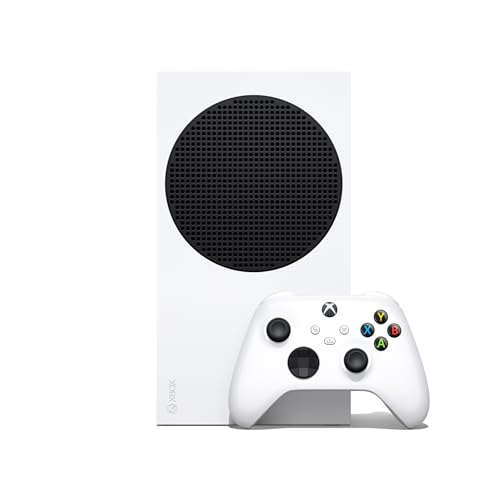
XBOX Series S | Digital Gaming Console | 512GB SSD | Includes Wireless Controller, 1440P Gaming, 120FPS, Robot White


As an Amazon Associate we earn from qualifying purchases. Product prices and availability are accurate as of the date/time indicated.
Microsoft’s Series S is named as the smaller entry in its current Xbox family. It is a living-room console, so it connects to a TV and is not portable.
- Pro: A compact living-room console is easy to place on a shelf, and it works with Microsoft’s family settings for time and content limits.
- Pro: A console from a large ecosystem usually offers a wide game library, including many titles that suit older kids.
- Con: It is not portable, so it only works where there is a TV, which limits travel and bedroom play.
Skip it if your child wants to play on a handheld, or if you want a console designed mostly around younger children’s games. Younger kids may find the menus and store busier than they need.
PlayStation 5 Digital Edition

PlayStation®5 Digital Edition – 825GB


As an Amazon Associate we earn from qualifying purchases. Product prices and availability are accurate as of the date/time indicated.
Sony’s PlayStation 5 in its digital-only version. Digital Edition means there is no disc drive, so games are bought and downloaded from the online store.
- Pro: A digital-only console has no discs to lose or scratch, which suits young children who are rough with physical media.
- Pro: Families already using PlayStation accounts can keep game libraries and parental controls in one place.
- Con: Without a disc drive, you cannot play used discs or borrow games from friends, and you will rely on download storage. Large downloads can also fill the drive quickly, which matters in a home with slow internet.
Skip it if you want to buy physical games or share discs between siblings, or if you prefer a smaller, handheld-friendly system for a young child. A living-room console also keeps play tied to one TV.
NES Classic Edition
Nintendo Entertainment System: NES Classic Edition
As an Amazon Associate we earn from qualifying purchases. Product prices and availability are accurate as of the date/time indicated.
A small retro console named after the original Nintendo Entertainment System, sold as a Classic Edition. The name suggests a fixed collection of built-in games rather than an open game store.
- Pro: A fixed set of games means no store, no downloads, and no surprise spending, which can be reassuring for parents.
- Pro: Classic games are easy to understand, so even young children can pick up a controller and start playing quickly.
- Con: It only offers a limited set of older games, so a child may finish or outgrow them faster than on a modern console.
Skip it if your child wants current games or online play, or if friends are mostly playing modern titles on newer systems. Nostalgia is the main appeal, so expect more interest from adults than from a child raised on modern games.
Which One Fits
- Young children on the go: the Nintendo Switch Lite.
- Families wanting TV and handheld: the Nintendo Switch OLED Model or the Nintendo Switch 2.
- Living-room players with a big TV: the Xbox Series S or the PlayStation 5 Digital Edition.
- Parents wanting no store spending: the NES Classic Edition.
- Households with kids who also love music: consider an electronic drum set for kids as a screen-free alternative.
Common Mistakes
- Buying a console before checking the age ratings of the games the child wants.
- Leaving store purchases open, with no password or approval for spending. Gift cards and saved payment cards make this easy to overlook.
- Forgetting extra controllers, which turns a two-player game into a one-player argument.
- Ignoring storage, then running out of space after a few downloaded games.
- Skipping a protective case for a handheld that will travel in a backpack. Screens crack more often than any other part.
FAQ
What is the best first console for a young child?
Many families start with a handheld or hybrid system with kid-friendly games, because it is simple and portable.
Do I need to pay for online play?
Often, yes, for online multiplayer. Offline games usually work without a subscription. Check which games your child wants before paying for a membership.
How do I limit screen time?
Use the console’s built-in parental controls, often managed through a phone app, to set daily limits and bedtime shutoffs. Agree on the rules together so they feel fair instead of imposed.
Can a console be used on car trips?
Handheld and hybrid consoles can. Long trips are easier with comfort items too, and some families add premium all-in-one car seats that keep children comfortable for hours.
How do I make the console last?
Use a case, keep it ventilated, and teach younger children to hold it over a soft surface rather than a hard floor.