Our Short List of 3

- AHAM VERIFIDE CADR, so its performance figures are independently checked
- Genuine H13 HEPA plus activated carbon in one filter cartridge
- Very quiet 24-decibel sleep mode for bedrooms
- Compact and light, easy to move between rooms
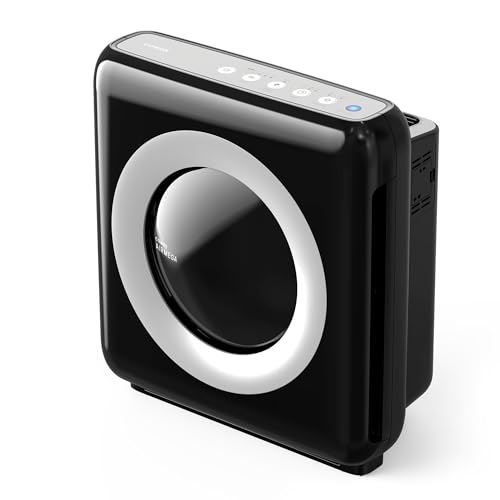
- Covers up to 361 square feet with a strong CADR across dust, pollen, and smoke
- Auto mode with an air-quality sensor adjusts fan speed on its own
- Washable pre-filter extends HEPA filter life
- Four-stage filtration including a deodorization filter for musty odors

- Covers up to 360 square feet, suitable for living rooms
- Washable carbon filter lowers ongoing replacement costs
- True HEPA filtration for airborne mold spores
- Quiet 27.8-decibel low setting and a handy remote control
All 3 Picks at a Glance
| Product | Specs | Action |
|---|---|---|
| LEVOIT Core 300 |
| Check price on Amazon |
| Coway Airmega AP-1512HH Mighty |
| Check price on Amazon |
| Winix 5500-2 |
| Check price on Amazon |
Key takeaways
- Looking for the best affordable air purifiers for mold? Compare three HEPA picks for bedrooms and living rooms, plus how to choose the right size and filter.
Mold spores are a stubborn indoor problem. They drift through the air in bedrooms, bathrooms, basements, and anywhere dampness lingers, and once they are airborne they can settle on furniture, bedding, and lungs. An air purifier will not remove mold growing on a wall or fix a leak, but a well-chosen purifier with a true HEPA filter and an activated carbon stage can capture airborne mold spores and reduce the musty odors that come with them. That is exactly what this guide is about: finding the best affordable air purifiers for mold without paying for features you will never use.
The three purifiers below all use genuine HEPA filtration, all are sold on Amazon US, and all cover a single room well when sized correctly. They differ in coverage, noise, controls, and running costs, so the right choice depends mostly on your room size and how much automation you want.
At a Glance
| Product | Best For | Key Spec |
|---|---|---|
| LEVOIT Core 300 | Small bedrooms and tight budgets | H13 HEPA, 219 sq ft coverage, 24 dB sleep mode |
| Coway Airmega AP-1512HH Mighty | Larger bedrooms and living rooms | True HEPA, 361 sq ft coverage, auto and eco modes |
| Winix 5500-2 | Odors and larger living spaces | True HEPA, 360 sq ft coverage, washable carbon filter |
How to Choose an Affordable Air Purifier for Mold
Shopping for a mold-focused air purifier is simpler than the marketing suggests, because only a handful of features actually affect how well a unit handles airborne mold spores. Start with the filter. A true HEPA filter captures 99.97 percent of airborne particles as small as 0.3 microns, which includes mold spores, and that rating should be stated plainly on the listing. Filters described only as “HEPA-like” or “HEPA-style” are not the same thing and should be avoided for this job. A second stage matters too: an activated carbon filter helps with the musty odors that often accompany damp rooms, and a washable pre-filter catches larger dust and hair before it reaches the HEPA layer, which extends the life of the more expensive filter.
Room size is the second decision, and it is the one most buyers get wrong. A purifier rated for a small bedroom will struggle in an open-plan living room, not because its filter is weak but because it cannot move enough air. Measure your room, compare it with the coverage figure, and size up rather than down if the room has high ceilings or open doorways. For mold concerns, running the purifier continuously on a low or medium setting is more useful than blasting it for an hour and switching it off, so a unit quiet enough to leave running matters more than one with a dramatic top speed.
Noise is the third factor, especially for bedrooms. Watch the sleep-mode figure: anything around the mid-twenties is quiet enough for most sleepers, while anything above the low fifties will be noticeable. Automatic modes and air-quality sensors are genuinely useful in a living room, where cooking, pets, and open windows change the air constantly, but they are optional in a bedroom where the purifier mostly runs on a steady low setting. Wi-Fi and app control are conveniences, not filtration improvements, and they are the first things to drop if the budget is tight.
Running costs decide what “affordable” really means over a year or two. HEPA filters need replacing, typically every six to twelve months, and replacement filter prices vary widely between brands. A purifier with a modest purchase price and expensive filters can cost more over two years than a slightly pricier unit with cheaper replacements. Check the replacement filter cost and interval before buying.
Finally, keep the purifier in perspective. It handles airborne spores, not the mold itself. Pair it with the basics: fix leaks, ventilate bathrooms, keep indoor humidity in a moderate range with a dehumidifier if needed, and clean visible mold promptly. A purifier works best as one part of that routine, in the room where you spend the most time. If anyone in the household has persistent respiratory symptoms, talk with a clinician rather than relying on an appliance for relief.
LEVOIT Core 300
- AHAM VERIFIDE CADR, so its performance figures are independently checked
- Genuine H13 HEPA plus activated carbon in one filter cartridge
- Very quiet 24-decibel sleep mode for bedrooms
- Compact and light, easy to move between rooms
The LEVOIT Core 300 is the most budget-friendly purifier in this guide and one of the best-selling HEPA purifiers on Amazon, which makes it a natural starting point for anyone shopping for the best affordable air purifiers for mold on a modest budget. Its appeal is straightforward: genuine H13 HEPA filtration, a compact cylindrical body that draws air in from all sides, and a sleep mode quiet enough for a bedroom, all in a unit that fits easily on a nightstand or a small table.
The Core 300 uses a three-in-one filter cartridge that combines a pre-filter, an H13 HEPA layer, and an activated carbon layer in a single cylindrical unit. It is rated to cover rooms up to about 219 square feet, with an AHAM VERIFIDE CADR of 143 CFM for smoke, 153 CFM for dust, and 167 CFM for pollen. The unit measures 8.7 by 8.7 by 14.2 inches and weighs about 7.5 pounds, so it moves easily between rooms. Controls sit on the top panel: three fan speeds, a sleep mode, a timer with two, four, six, and eight-hour settings, a display lock, a filter-change indicator, and a display-off option. Noise drops to 24 decibels in sleep mode. The purifier carries a two-year warranty and is AHAM VERIFIDE, FCC certified, ETL listed, and CARB compliant.
For mold concerns, the Core 300 suits a single bedroom, a nursery, a home office, or a dorm room. Its 360-degree intake pulls air from every direction, which helps in a small room where the unit may sit in a corner. The activated carbon layer addresses musty odors, while the H13 HEPA media captures airborne mold spores along with dust, pollen, and pet dander. Because it has no air-quality sensor or auto mode, you set the fan speed yourself, which is simple but means the unit will not speed up on its own when the air worsens.
The main limitation is coverage. At roughly 219 square feet, the Core 300 is a single-room purifier, and it will not keep up in a large living room or an open-plan space. Filter replacements are needed about every six months with regular use, so factor that into the long-term cost, although replacement filters for this model are among the least expensive in its class. There is also no app or voice control on the base model; the smart version is a separate, pricier model.
Pros:
Cons:
Coway Airmega AP-1512HH Mighty
- Covers up to 361 square feet with a strong CADR across dust, pollen, and smoke
- Auto mode with an air-quality sensor adjusts fan speed on its own
- Washable pre-filter extends HEPA filter life
- Four-stage filtration including a deodorization filter for musty odors
The Coway Airmega AP-1512HH Mighty is the step up for anyone whose mold concerns extend beyond a single small bedroom. It is a long-standing favorite in independent roundups for allergy and mold-related airborne particles, and it pairs a larger coverage area with automatic operation, so it adjusts itself as conditions change. If the Core 300 is the budget pick, the Mighty is the value pick for a living room or a large bedroom.
The Mighty uses a four-stage filtration system: a washable pre-filter, a deodorization filter, a True HEPA filter, and a Vital Ion stage. It captures up to 99.97 percent of particles 0.3 microns in size, including pollen, pollutants, and other allergens. Coverage is rated up to 361 square feet, with a CADR of 246 CFM for dust, 240 CFM for pollen, and 233 CFM for smoke, which is a substantial jump over the compact models in this guide. The unit measures 16.8 by 18.3 by 9.6 inches, weighs 12.3 pounds, and draws 77 watts. Noise ranges from 24.4 decibels on the lowest setting to 53.8 decibels at full speed. It includes auto mode, eco mode, a timer, an air-quality indicator, and a filter-change indicator, and it is CARB certified. The manufacturer warranty covers internal and functional parts for one year and motor and electronic parts for three years.
For mold-related use, the Mighty’s strengths are coverage and automation. The air-quality sensor and auto mode let it respond when a room’s air worsens, for example after a shower or when a damp basement door is opened, and eco mode drops the fan to save energy when the air is clean. The washable pre-filter keeps larger particles out of the HEPA layer and stretches the time between replacements, and the deodorization filter helps with musty smells.
The trade-offs are size, noise at full speed, and a higher ongoing cost than the compact picks. The Mighty is a floor-standing unit rather than a tabletop one, and at its highest fan setting it is clearly audible, although the low and auto settings are much quieter. Replacement filters cost more than those for the Core 300, so the total cost over two years narrows the gap between the two. The ionizer stage can be switched off, and many buyers simply leave it off. Even so, for a main living space or a large bedroom, the Mighty is the most capable affordable option in this guide.
Pros:
Cons:
Winix 5500-2
- Covers up to 360 square feet, suitable for living rooms
- Washable carbon filter lowers ongoing replacement costs
- True HEPA filtration for airborne mold spores
- Quiet 27.8-decibel low setting and a handy remote control
The Winix 5500-2 rounds out this guide as the pick for larger living spaces where odors are as much of a problem as airborne particles. It is a regular in best-value roundups for pet owners and odor control, and its washable carbon filter and remote control make it a practical choice for a living room that sees cooking smells, pets, and damp air in equal measure.
The 5500-2 uses three filter stages: a washable AOC carbon filter, a True HEPA filter, and PlasmaWave technology, which the manufacturer describes as breaking down odors and airborne contaminants at a molecular level. It is rated for rooms up to 360 square feet, with a smoke CADR of 232 CFM. Noise is listed at 27.8 decibels on its quietest setting, and the unit includes a remote control, a timer, and multiple fan speeds.
For mold concerns, the 5500-2’s case rests on its coverage and its odor handling. The True HEPA layer captures airborne mold spores, while the washable carbon filter targets the musty smells that often linger in damp rooms and basements. The PlasmaWave stage is presented as an additional layer for odors and airborne contaminants, and it can be switched off if you prefer to run the unit on filtration alone. In a living room or a large bedroom, the 5500-2 moves enough air to make a real difference, and the remote control is a small convenience that matters when the unit sits across the room.
The limitations are modest but worth noting. The 5500-2 has no air-quality sensor or auto mode, so like the Core 300 it relies on manual fan settings, and it is a larger floor unit rather than a compact tabletop model. Its HEPA filter still needs periodic replacement, and the unit needs a clear spot with space around it for airflow. For a living room or a large bedroom where odor control matters, those are acceptable trade-offs.
Pros:
Cons:
Which One Fits Your Home?
The right choice comes down to room size and how much automation you want. For a single bedroom, nursery, or home office, the LEVOIT Core 300 is the sensible pick: it is the most affordable of the three, its H13 HEPA filter and carbon layer handle airborne spores and musty odors, and its 24-decibel sleep mode makes it easy to leave running overnight. Its only real weakness is coverage, so measure first and move up if the room is larger than about 219 square feet.
For a living room or a large bedroom, choose between the Coway Mighty and the Winix 5500-2. The Mighty wins if you want the purifier to manage itself: its air-quality sensor, auto mode, and eco mode adjust the fan without your input, and its washable pre-filter keeps maintenance simple. The Winix 5500-2 wins if odors are the bigger complaint and you like a washable carbon filter and a remote control, and you are comfortable setting the fan speed by hand. Both cover roughly 360 square feet, so either will serve a main living space well. Whichever you choose, place it where air can circulate freely, keep it running on a low or medium setting rather than in short bursts, and remember that it works alongside moisture control and cleaning, not instead of them.
Frequently Asked Questions
Do air purifiers actually help with mold?
An air purifier with a true HEPA filter captures airborne mold spores, which can reduce the number of spores floating around a room and help with musty odors when a carbon filter is included. It does not remove mold growing on surfaces, and it does not fix the dampness that lets mold grow. For lasting results, find and fix the moisture source, clean visible mold, and use the purifier as a supporting measure.
What type of filter is best for mold spores?
A true HEPA filter is the standard to look for, because it is rated to capture 99.97 percent of airborne particles as small as 0.3 microns, a size range that includes mold spores. Pair it with an activated carbon filter for odor control and a pre-filter to catch larger dust and hair. Avoid filters marketed only as HEPA-like or HEPA-style, since those terms do not carry the same rating.
What size air purifier do I need for a moldy room?
Match the purifier’s rated coverage to the room’s floor area, and size up if the room has high ceilings or opens into other spaces. A compact unit rated for about 219 square feet suits a bedroom, while a living room generally needs a unit rated for about 360 square feet. A purifier that is too small for the room will run constantly without keeping up, so coverage matters more than brand.
How often should I replace the filter?
Most manufacturers recommend replacing the HEPA filter every six to twelve months, depending on how much the unit runs and how dusty or damp the room is. Washable pre-filters and carbon stages should be cleaned on the schedule in the manual. A filter-change indicator, included on the models in this guide, takes the guesswork out of timing.
Can I run an air purifier all day?
Yes, air purifiers are designed for continuous use, and for mold concerns they work best when run steadily on a low or medium setting rather than in short bursts. Choose a model with a quiet sleep or low mode for bedrooms, and check the replacement filter cost, since continuous running shortens the interval between changes. Keep the intake and outlet clear of curtains and furniture so air can circulate freely.
Is an air purifier enough on its own for a damp home?
No. A purifier handles airborne spores only. A damp home needs moisture control first: fix leaks, improve ventilation, and consider a dehumidifier to keep indoor humidity in a moderate range. Clean visible mold promptly and, for extensive growth, consult a professional. If anyone in the household has ongoing respiratory symptoms, speak with a clinician rather than relying on an appliance.
Conclusion
The best affordable air purifiers for mold are the ones that pair genuine HEPA filtration with the right coverage for your room, and the three models in this guide cover the most common situations. The LEVOIT Core 300 is the budget pick for a bedroom or small room, the Coway Airmega AP-1512HH Mighty adds coverage and automatic operation for a living room, and the Winix 5500-2 brings strong odor control and a washable carbon filter to larger spaces. Whichever you choose, size it to the room, run it steadily, replace filters on schedule, and deal with the moisture that lets mold grow in the first place.
Disclosure: As an Amazon Associate, we earn from qualifying purchases.