Our Short List of 3

- Best for: Mixed gaming and design desks that value battery life and a familiar shape
- Sensor: Logitech HERO 2
- Sensitivity: up to 44,000 DPI
- Tracking: 888 IPS, 88G acceleration
- Weight: 60 g
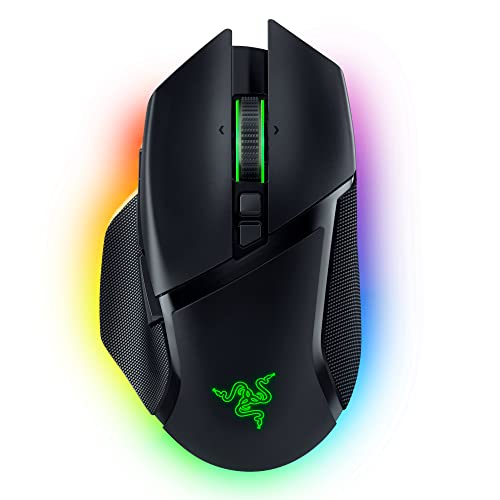
- Best for: Editors and designers who game, and anyone who scrolls timelines daily
- Sensor: Razer Focus Pro 30K Optical Sensor
- Sensitivity: up to 30,000 DPI
- Scroll wheel: HyperScroll tilt wheel with tactile, free-spin and Smart-Reel modes
- Buttons: 13 programmable controls, Gen-3 optical switches

- Best for: Palm-grip users who want one mouse loaded with shortcuts for work and play
- Sensor: Logitech HERO 25K
- Sensitivity: 100 to 25,600 DPI
- Buttons: 13 programmable controls, LIGHTFORCE hybrid switches
- Scroll wheel: dual-mode ratchet and free-spin with toggle
All 3 Picks at a Glance
| Product | Specs | Action |
|---|---|---|
| Logitech G PRO X Superlight 2 |
| Check price on Amazon |
| Razer Basilisk V3 Pro |
| Check price on Amazon |
| Logitech G502 X Plus |
| Check price on Amazon |
Key takeaways
- Four gaming mice that double as precise graphics tools, compared on sensor, DPI range, weight, scroll wheel and battery life from their Amazon listings.
One mouse often has to cover two very different jobs: fast, repeatable aim in a shooter at night and slow, pixel-level control in a photo editor or illustration app during the day. The real decision is which compromises you accept, because the lightest esports shapes give up buttons and scroll features, while the heavier ergonomic models built for long work sessions feel slower in flick-heavy games.
This guide is for competitive players who also retouch photos, designers who game after work, and anyone replacing two desk mice with one. Every pick below is a gaming-line mouse with a flagship optical sensor, chosen from the names and specifications printed on its Amazon listing, with the sensor model, DPI ceiling, weight and battery figure taken from that same page.
Quick Picks
As an Amazon Associate we earn from qualifying purchases
| Product | Best for | Key spec from title |
|---|---|---|
| Razer Viper V3 Pro | Lightest flick aim with fine DPI steps | 54 g, Focus Pro 35K sensor |
| Logitech G PRO X Superlight 2 | Safe shape and the longest battery | 60 g, HERO 2 sensor, 95 hours |
| Razer Basilisk V3 Pro | Timeline and canvas scrolling | HyperScroll tilt wheel, 30K DPI |
| Logitech G502 X Plus | Most programmable controls | 13 controls, HERO 25K sensor |
How to Choose
Sensor quality and DPI step control
For graphics work, the headline DPI number matters less than how finely you can set it and whether tracking stays clean at low speeds. A retoucher may park the pointer at 800 DPI for masking, then jump to a higher setting for broad strokes. Razer’s Focus Pro sensors adjust in 1-DPI steps on the Viper V3 Pro, while Logitech’s HERO sensors track with zero smoothing or filtering per their listings. Look for a named flagship sensor, a stated tracking speed in IPS, and on-the-fly DPI switching so one mouse can serve a canvas and a match without reopening software.
Weight and shape against your grip
Weight changes how a mouse behaves in both jobs. Models near 54 to 60 grams move with little effort, which suits fingertip and claw grips and quick direction changes in games, but some artists find them twitchy for slow line work. Ergonomic shells around 106 to 112 grams plant the hand, spread contact across the palm and feel steadier during long editing sessions, at the cost of slower flicks. Match the shell to your grip first: symmetrical shapes favour claw and fingertip holds, while sculpted right-handed bodies with a thumb rest suit palm grips and larger hands.
Scroll wheel and button count for creative apps
This is where gaming and graphics needs split most clearly. A plain notched wheel is enough for weapon switching, but timelines, spreadsheets and wide canvases reward a wheel that tilts for horizontal scrolling or unlocks into a free spin. The Basilisk V3 Pro and G502 X Plus both build their identity around that kind of wheel. Button count matters the same way: five buttons keep an esports mouse clean, while eleven to thirteen programmable controls let you park undo, brush size and layer shortcuts under your thumb instead of reaching for the keyboard.
Connection modes and battery behaviour
All four mice here run on 2.4 GHz wireless receivers, which keep latency low enough for competitive play, and all can work over a USB-C cable while charging. Bluetooth, found on the Basilisk V3 Pro, is handy for a second machine but is not the mode to game in. Battery figures need context: the listings quote up to 90 to 130 hours at standard polling, yet raising the polling rate towards 8,000 Hz on the Viper or Superlight drains a charge far faster, so treat the headline number as a best case for ordinary settings.
The 4 Best Options
Razer Viper V3 Pro
At 54 grams, this is the mouse for players who aim with their fingertips and still want precision left over for design work. The symmetrical shell keeps the balance neutral, the Focus Pro 35K Optical Sensor Gen-2 tracks on a wide range of surfaces including glass, and its 1-DPI step adjustments let you set an unusually exact low speed for masking, pen paths and retouching. The included HyperPolling dongle raises wireless polling to 8,000 Hz for matches, while Gen-3 optical switches keep clicks consistent. It gives up the tilt wheel and extra buttons that creative apps love, so it suits people whose graphics tasks are pointer-led rather than shortcut-led.
Specs
- Sensor: Razer Focus Pro 35K Optical Sensor Gen-2
- Sensitivity: up to 35,000 DPI, adjustable in 1-DPI steps
- Tracking: 750 IPS, 70G acceleration
- Weight: 54 g
- Battery life: up to 95 hours
- Polling: up to 8,000 Hz with the included HyperPolling wireless dongle
- Buttons: 8 programmable controls, Gen-3 optical switches
- Model number: RZ01-05120100-R3U1
Best for: Competitive players who also do pointer-heavy photo and vector work
Watch out for: No tilt wheel or Bluetooth, and battery life falls sharply at 8,000 Hz polling
ASIN: B0CW25XR5R
Logitech G PRO X Superlight 2
- Best for: Mixed gaming and design desks that value battery life and a familiar shape
- Sensor: Logitech HERO 2
- Sensitivity: up to 44,000 DPI
- Tracking: 888 IPS, 88G acceleration
- Weight: 60 g
Mixed gaming and design desks that value battery life and a familiar shape
Only five buttons and no Bluetooth, so multi-device and shortcut-heavy setups are limited
Logitech’s flagship is the conservative choice: a medium symmetrical shape most hands already know, a HERO 2 sensor, and battery life stretching to 95 hours, so the mouse disappears from your routine for weeks. LIGHTFORCE hybrid switches pair optical actuation with a mechanical click feel. For graphics work, the appeal is stability rather than features — tracking stays consistent at the low DPI settings used for careful selections, and the safe shape avoids the learning curve of sculpted shells. With only five programmable buttons and no tilt wheel, shortcut-heavy editors lean on the keyboard more, but players who split time between games and design get few surprises here.
Razer Basilisk V3 Pro
- Best for: Editors and designers who game, and anyone who scrolls timelines daily
- Sensor: Razer Focus Pro 30K Optical Sensor
- Sensitivity: up to 30,000 DPI
- Scroll wheel: HyperScroll tilt wheel with tactile, free-spin and Smart-Reel modes
- Buttons: 13 programmable controls, Gen-3 optical switches
Editors and designers who game, and anyone who scrolls timelines daily
The heaviest pick here, right-handed only, and the charging dock is a separate purchase
The Basilisk V3 Pro leans hardest into the graphics half of this brief. Its HyperScroll tilt wheel clicks side to side for horizontal movement across timelines and wide canvases, and it can switch between a tactile notch, a free spin and an automatic Smart-Reel mode. The right-handed shell has a proper thumb rest, thirteen programmable controls give creative shortcuts a home, and the Focus Pro 30K sensor still tracks at flagship level for evening gaming. It is also the heaviest mouse here and the shape only fits right hands, so committed fingertip players may find it planted. Bluetooth on board helps it double as a second-machine mouse.
Logitech G502 X Plus
- Best for: Palm-grip users who want one mouse loaded with shortcuts for work and play
- Sensor: Logitech HERO 25K
- Sensitivity: 100 to 25,600 DPI
- Buttons: 13 programmable controls, LIGHTFORCE hybrid switches
- Scroll wheel: dual-mode ratchet and free-spin with toggle
Palm-grip users who want one mouse loaded with shortcuts for work and play
Heavy for flick-heavy shooters, and the full feature set depends on Logitech’s software
The G502 X Plus carries the deepest control set in this group: thirteen programmable controls, a dual-mode scroll wheel that toggles between ratcheted steps and free spin, and a DPI shift button that drops sensitivity while you hold it — genuinely useful for fine selections in an editor as well as slow peeks in a game. The HERO 25K sensor covers a 100 to 25,600 DPI range, LIGHTFORCE switches handle the main clicks, and the battery runs up to 130 hours with the lighting off. At 106 grams it is a palm-grip mouse for people who prioritise features over speed, and its sculpted shell will not suit left-handed users.
Which One Fits Your Situation
You play competitive shooters and edit photos at night
Take the Viper V3 Pro. Its 54-gram shell and 8,000 Hz polling serve fast aim, while the Focus Pro sensor’s 1-DPI steps and glass tracking keep slow retouching controlled. You give up wheel tricks and spare buttons, so this fits players whose editing is mostly pointer work rather than shortcut choreography.
Your day is timelines, layers and wide canvases
The Basilisk V3 Pro earns its place through the tilt wheel alone: nudging horizontally through a video timeline or a sprawling design file becomes a thumb movement instead of a scrollbar hunt. Thirteen programmable controls hold your most-used commands, and the sensor remains more than quick enough when the workday ends and a match starts.
You want one mouse for the whole desk, no swapping
Choose between the Superlight 2 and the G502 X Plus by hand feel. The Superlight 2 is the neutral, lighter all-rounder with the longest stretches between charges. The G502 X Plus adds the free-spin wheel, DPI shift button and a much larger control set, at the cost of nearly double the weight.
Your hands are small or you use a claw grip
The Viper V3 Pro and Superlight 2 are the realistic options. Both use symmetrical shells that leave room for fingertips to steer, and both stay near 60 grams or under. The two ergonomic models are longer, taller and shaped for a full palm, which smaller hands often find harder to control precisely.
Common Mistakes
- Chasing the highest DPI figure and then never using it, when low-DPI control and fine adjustment steps are what graphics work actually rewards.
- Buying an ultralight esports shape for long editing days, then fighting hand fatigue because the shell gives the palm nothing to rest on.
- Leaving the polling rate at 8,000 Hz permanently and blaming the mouse when the battery drains in a fraction of the quoted time.
- Ignoring the scroll wheel, even though tilt and free-spin modes are the features creative apps benefit from most.
- Picking a sculpted right-handed mouse for a shared or left-handed desk without checking the shape first.
Frequently Asked Questions
What DPI should I set for gaming and for graphics work?
Most players settle between 400 and 1,600 DPI for shooters, and many editors work in the same band for selections and brush control, raising it only for sweeping across large monitors. Every mouse here adjusts in software and can switch on the fly, so save two or three steps and change them with a button rather than hunting for one perfect number.
Does a lighter mouse help or hurt precision in design apps?
It depends on the task. A 54 to 60 gram mouse starts and stops with very little effort, which helps small corrections, but some artists find that lightness makes long, slow strokes harder to keep steady. Heavier ergonomic models around 106 grams feel calmer for line work. Grip and shape usually matter more than the number itself.
Can a gaming mouse replace a dedicated graphics or ergonomic mouse?
For most people, yes. The flagship sensors in this group track as accurately as anything sold for design work, and models like the Basilisk V3 Pro add the tilt wheel and programmable controls that creative software uses well. What they do not provide is a vertical or trackball shape, so anyone managing wrist strain may still need a specialist shape.
Is wireless reliable enough for both gaming and detailed work?
With the 2.4 GHz receivers these mice ship with, yes — the connection is fast and stable enough for competitive play, so it is comfortably quick enough for editing. Bluetooth modes are better kept for a second laptop or tablet. If you work far from the receiver, use the included extension cable to bring the dongle closer to the desk surface.