Our Short List of 3

- Best for: A garage, basement or rented shop with one 120V outlet and a steady diet of sheet metal.
- Output: 20 amps, 120V input only
- Clean cut: 1/4 in mild steel, 3/16 in aluminum
- Weight: 21.1 lb
- Torch: drag torch, 13 ft; ground clamp, 8 ft
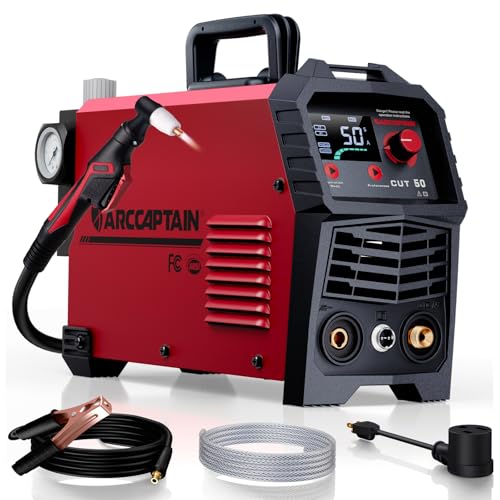
- Best for: A first plasma cutter for sheet, brackets and occasional half-inch plate in a home shop.
- Output: 50 amps, 110/220V dual voltage
- Clean cut: 1/2 in steel on 220V; maximum severance 3/4 in
- Weight: 13 lb; dimensions 13 x 6 x 8 in
- Torch: PT31 torch for precision cutting

- Best for: Salvage, rusty fenders, painted sheet and expanded mesh where a contact start would sputter.
- Output: 55 amps, 110/220V dual voltage
- Clean cut: 5/16 in at 110V; 25/64 in at 220V
- Start type: blowback pilot arc, non-high-frequency
- Torch: IPT40 torch with non-touch pilot arc
All 5 Picks at a Glance
| Product | Specs | Action |
|---|---|---|
| Forney 251 Easy Weld 20P |
| Check price on Amazon |
| ARCCAPTAIN CUT50 |
| Check price on Amazon |
| YESWELDER CUT-55DS PRO |
| Check price on Amazon |
 ARCCAPTAIN iControl CUT55 Pro |
| Check price on Amazon |
 PRIMEWELD CUT50D |
| Check price on Amazon |
Key takeaways
- Find the best plasma cutters for thin metal: five machines with low-amp control, pilot arc starts and drag torches for cuts in sheet steel and aluminum.
Thin sheet is where a plasma cutter earns its keep or ruins a panel. A machine built for half-inch plate will blow straight through 22-gauge steel if it cannot dial down low enough, and a ragged, warped edge on a fender patch or a duct bracket costs more time to fix than the cut saved. The real decision is not how much power you can buy, but how little power you can control: a low-amp range, a steady arc at 15 to 25 amps, and a torch that holds a consistent standoff over thin stock.
This guide is for home-shop fabricators, auto body DIYers, HVAC installers and hobby builders who cut sheet steel, stainless and aluminum most weekends and plate only rarely. Every machine below was chosen from the names and specifications on its Amazon product page, with the same-type rule kept throughout: dedicated handheld plasma cutters only, no multi-process welder combos and no CNC tables.
Quick Picks
As an Amazon Associate we earn from qualifying purchases
| Product | Best for | Key spec from title |
|---|---|---|
| Forney 251 Easy Weld 20P | A garage with only a 120V outlet | 20A, 120V, 1/4 in clean cut |
| ARCCAPTAIN CUT50 | A first cutter that travels light | 50A, dual voltage, 13 lb |
| YESWELDER CUT-55DS PRO | Rusty, painted and mesh metal | 55A blowback pilot arc, IPT40 torch |
| ARCCAPTAIN iControl CUT55 Pro | Pilot arc plus app control and a 3-year warranty | 55A non-touch pilot arc, 1/2 in clean cut |
| PRIMEWELD CUT50D | A simple workhorse with no extras to configure | 50A, dual voltage, 1/2 in clean cut |
How to Choose
Low-end amperage matters more than maximum amperage
Thin metal is cut at the bottom of a machine’s range, not the top. A 50-amp cutter that only dials down to 30 amps will punch through 22-gauge sheet and leave a wide, heat-warped kerf, while a machine that holds a stable arc at 15 to 20 amps slices the same sheet cleanly. Check the lowest current the dial actually reaches before you buy, and look for a display that shows the set current so you can repeat a setting that worked. For 16-gauge mild steel, plan on roughly 20 to 30 amps with a quick travel speed; for 22-gauge, drop lower still and keep moving.
Pilot arc or contact start decides where you can cut
A non-touch pilot arc lights before the torch reaches the metal, so it starts on rust, paint, mill scale and expanded mesh without a bare grounding spot. A contact-start machine needs clean, bare metal under the tip or it will sputter and chew through consumables. Blowback starting gives you a pilot arc without a high-frequency burst, which matters if a CNC controller or a radio shares the bench, since high-frequency starts can throw electrical noise. If your stock is mostly clean sheet, contact start is fine; if it is salvage, buy the pilot arc.
Voltage, air supply and duty cycle set the real limits
Every machine here needs clean, dry compressed air at steady pressure, and wet or low-pressure air turns a good edge ragged fast. A built-in regulator and filter, or an air-pressure readout on the display, takes the guesswork out of setup. Dual-voltage machines run on a standard garage outlet at reduced output and step up on 220V, which is worth having if a heavier circuit arrives later. Also check the air appetite: a 20-amp machine asking for 1.5 CFM suits a small compressor, while a 55-amp machine wants a bigger tank and a longer rest between long cuts.
Torch type, consumables and warranty decide the running cost
A drag torch rides its tip directly on the metal, so standoff takes care of itself and a first cut looks like a cut rather than a ragged slot. Standoff torches need a steady hand or a guide, and they punish a wobble with a wide kerf. Consumables are the quiet ongoing cost: PT31 and IPT40 tips, electrodes and nozzles wear faster on thin, fast work, so check that spares are easy to find for the torch your machine uses. Warranty length varies from 12 months to three years in this group, and a longer warranty matters more on a budget inverter than on a shop-grade box.
The 5 Best Options
Forney 251 Easy Weld 20P
- Best for: A garage, basement or rented shop with one 120V outlet and a steady diet of sheet metal.
- Output: 20 amps, 120V input only
- Clean cut: 1/4 in mild steel, 3/16 in aluminum
- Weight: 21.1 lb
- Torch: drag torch, 13 ft; ground clamp, 8 ft
A garage, basement or rented shop with one 120V outlet and a steady diet of sheet metal.
It will not run on 220V, so plate thicker than a quarter inch is outside its range, and a small pancake compressor will leave you waiting between long cuts.
The Forney 251 is the only machine here built around a single job: cutting thin metal from a standard household outlet. Twenty amps sounds small next to the 50-amp boxes, but it is exactly the range sheet work lives in, and the drag torch keeps the tip riding on the metal so standoff never drifts mid-cut. It cuts a clean quarter inch in mild steel and 3/16 inch in aluminum, which covers brackets, exhaust tubing, duct work and body panels without ever needing a heavier circuit.
ARCCAPTAIN CUT50
- Best for: A first plasma cutter for sheet, brackets and occasional half-inch plate in a home shop.
- Output: 50 amps, 110/220V dual voltage
- Clean cut: 1/2 in steel on 220V; maximum severance 3/4 in
- Weight: 13 lb; dimensions 13 x 6 x 8 in
- Torch: PT31 torch for precision cutting
A first plasma cutter for sheet, brackets and occasional half-inch plate in a home shop.
The Amazon listing crawl shows no featured offers beside a bought-in-past-week badge, so confirm a live offer before ordering, and note that 110V work tops out near quarter-inch steel.
The CUT50 is the lightest dedicated cutter in this group at 13 pounds, and it is the machine to pick when the cutter has to travel to the work rather than the other way around. Dual voltage means it starts on the garage outlet you already have and steps up when a 220V circuit gets wired in, while the LED display shows voltage and current without a menu. The regulator and filter arrive pre-installed with a quick connect, so setup is a hose, a plug and about a minute.
YESWELDER CUT-55DS PRO
- Best for: Salvage, rusty fenders, painted sheet and expanded mesh where a contact start would sputter.
- Output: 55 amps, 110/220V dual voltage
- Clean cut: 5/16 in at 110V; 25/64 in at 220V
- Start type: blowback pilot arc, non-high-frequency
- Torch: IPT40 torch with non-touch pilot arc
Salvage, rusty fenders, painted sheet and expanded mesh where a contact start would sputter.
Clean-cut capacity drops to 5/16 inch on 110V, so this machine wants a 220V circuit for its best work, and at 19.4 lb it is a carry-with-two-hands box rather than a shoulder-slung one.
The CUT-55DS PRO earns its place on dirty metal. Its blowback piston lights the arc without a high-frequency burst, so there is no electrical noise to upset a nearby controller, and the IPT40 torch adds a non-touch pilot arc on top, so rusted, painted and coated surfaces start cutting without a bare patch to ground against. The display carries air pressure alongside voltage and current, which is the number that quietly decides cut quality, and it sits in front of you while you work instead of on a gauge at the compressor.
ARCCAPTAIN iControl CUT55 Pro
- Best for: A home shop that wants pilot-arc starts, app-assisted setup and the longest warranty in this group.
- Output: 55 amps, 120/240V dual voltage
- Clean cut: 1/2 in; maximum cut 3/4 in
- Start type: non-touch, high-frequency pilot arc
- Weight: about 19.5 lb
A home shop that wants pilot-arc starts, app-assisted setup and the longest warranty in this group.
The app adds little beyond the panel controls for most users, and the high-frequency start can throw electrical noise near a CNC controller or a radio on the same bench.
The CUT55 Pro is the step up from the CUT50 for buyers who want a non-touch pilot arc and a longer warranty in a machine they can still carry out to the truck. The high-frequency pilot arc starts on dirty steel without hunting for a clean spot and keeps going through a cut that wanders onto mill scale or paint. Setup is genuinely quick, with the regulator and filter pre-installed and a 10-foot torch, a 10-foot air hose and a 10-foot earth clamp giving enough reach to work away from the machine rather than beside it.
PRIMEWELD CUT50D
- Best for: Steady quarter-inch fabrication and weekend bracket, gate and trailer work with nothing to fiddle with.
- Output: 50 amps, 110/220V dual voltage
- Clean cut: 1/2 in steel
- Start type: contact start, no non-touch pilot arc
- Controls: simple dial controls, no display screen
Steady quarter-inch fabrication and weekend bracket, gate and trailer work with nothing to fiddle with.
With no pilot arc it needs clean, bare metal to start reliably, so rusty or painted stock will sputter and wear tips faster, and there is no screen showing the set current.
The CUT50D is the least clever machine in this group, and that is precisely why it earns a place: a 50-amp arc that does what the dial says, with a torch trigger that feels like a trigger. There is no pilot arc, no color screen and no app to configure, so if you have owned a welder you already know how to run it. Half-inch steel goes without complaint, 5/16 inch is comfortable work, and quarter-inch plate takes a steady walk rather than a fight, which is the kind of arc that makes a cutting torch feel like hard labor.
Which One Fits Your Situation
You only have a standard 120V outlet
Pick the Forney 251 Easy Weld 20P. It is the only machine here that runs on 120 volts alone, and its 20-amp output and drag torch are tuned for exactly the sheet work a single-outlet garage produces. You give up plate capacity, but you never hunt for an adapter or a circuit you do not have.
You are buying your first plasma cutter
Pick the ARCCAPTAIN CUT50. At 13 pounds with a shoulder strap it is easy to carry out to a fence line, the LED display shows the current you set, and dual voltage lets you start on a garage outlet and grow into 220V later. Confirm the live offer first, since the listing crawl shows mixed availability signals.
Your stock is rusty, painted or expanded mesh
Pick the YESWELDER CUT-55DS PRO. Its blowback pilot arc and IPT40 torch start on coated and rusted surfaces without a bare grounding patch, and the blowback design avoids the high-frequency noise that can upset nearby electronics. Keep a 220V circuit available, since its clean cut drops on 110V.
You want the longest warranty and app control
Pick the ARCCAPTAIN iControl CUT55 Pro. The non-touch pilot arc handles dirty steel, the three-year warranty is the longest in this group, and the app lets you adjust parameters from across the shop. Just keep it away from a CNC controller, since its high-frequency start can throw noise.
Common Mistakes
- Buying on the maximum severance number instead of the clean-cut figure, then wondering why the edge needs grinding.
- Running full amperage on thin sheet, which blows through the metal and warps the panel around the cut.
- Feeding wet or low-pressure air to the torch, which turns a good edge ragged and eats consumables.
- Trying to contact-start on rusty or painted metal without a pilot arc, then blaming the machine for sputtering starts.
- Forgetting the compressor: a small tank runs dry mid-cut and leaves you waiting between passes on anything long.
Frequently Asked Questions
What amperage should I use for 16-gauge steel?
Start near 20 to 25 amps with a quick, steady travel speed, then adjust from the edge you see. Thinner sheet wants less current and faster travel, while slower travel at the same current puts more heat into the panel and invites warping. A machine with a clear current display makes it easy to repeat a setting that worked.
Can a plasma cutter cut aluminum and stainless steel?
Yes, plasma cuts any metal that conducts electricity, including mild steel, stainless, aluminum, copper and brass. Thin aluminum needs low amperage and dry air, since it melts fast and shows a rough edge when the air is wet. Stainless cuts cleanly at modest current, but keep the travel speed up to limit heat discoloration along the edge.
Do I need a 220V circuit for thin metal?
No. A 120V outlet handles sheet metal comfortably, and the Forney 251 in this guide runs on 120V alone. Dual-voltage machines are worth having when you also cut plate, since their output and clean-cut capacity rise on 220V, but for sheet work the heavier circuit buys little.
What is the difference between a pilot arc and a high-frequency start?
A pilot arc keeps a live arc in the air before the torch reaches the metal, so it starts on rust, paint and mesh without touching the tip. A high-frequency start uses an electrical burst to ionize the air gap, which works well but can throw noise into nearby electronics. Blowback starting gives you a pilot arc without that burst.