Key takeaways
- Pro: A brand focused on mobile audio means the tweeter is designed to live in a vehicle, not borrowed from a home speaker.
- Pro: A compact dome class generally fits more mounting spots, including pillars and dash corners where space is limited.
- Con: Smaller domes cannot play as low as larger ones, so the crossover point has to be set carefully to avoid strain.
If vocals in your car sound muffled, cymbals vanish, or the sound seems to live down around your ankles, the problem is usually the top end. Factory speakers often handle highs with a small cone that was never meant to reach very far, and a dedicated tweeter fixes that by taking over the highest frequencies with a small dome built for the job. Swapping or adding tweeters is one of the cheapest ways to change how a stock system sounds.
The catch is that a tweeter is only one part of a chain. It needs to fit a mounting location, match the rest of the speakers, and be paired with a crossover so it does not receive bass it cannot handle. This guide covers five tweeters from audio brands by name, the thresholds that decide whether a model will suit your car, and the trade-offs that follow from what each product name tells you. As of 2026 the basic setup rules are unchanged.
Quick Picks
| Product | Best for | Worth knowing |
|---|---|---|
| JL Audio C2-075ct Tweeter | Upgrading a component system from a well-known car audio brand | Named as a 0.75 inch class tweeter, so mounting depth and cup size need checking |
| Rockford Fosgate Prime R1T-S Tweeter | Straightforward add-on for a basic upgrade | Sold as a tweeter, so a crossover is still part of the plan |
| Dayton Audio ND25FA-6 Tweeter | DIY installers comfortable building custom pods | A 25 mm size in the name, with no vehicle-specific mounts implied |
| Hertz Dieci DT 24.3 Tweeter | Buyers who like compact European audio brands | The 24 in the name hints at a small dome, which suits tight spaces |
| Kicker CS Series Tweeter | Shoppers who want to match a Kicker speaker set | Best used alongside matching drivers from the same series |
How to Choose
Dome size and mounting space
Most car tweeters use a dome between 0.75 and 1 inch, often written as 19 to 25 mm. Before shopping, find where the tweeter will live: a sail panel, a dash corner, an A-pillar, or the factory grille. Measure the opening diameter and depth, because a tweeter that fits in your hand may still not clear the trim panel. A good rule of thumb is to leave a few millimeters of clearance behind the cup. Also check whether the tweeter comes with a flush mount cup, a surface mount ring, or an angled pod, since each option changes both the look and the way the sound reaches the listener. Surface mounts are easier to install, while flush mounts look cleaner but require cutting or finding a factory opening.
Dome material and sound character
Soft domes made of silk or textile generally sound smoother and forgiving, while metal domes such as aluminum, titanium, or beryllium alloys tend to sound sharper and more detailed. If you listen to a lot of bright music or sit close to the speakers, lean toward soft. If your factory system sounds dull, a metal dome often wakes it up, but may become fatiguing on long drives. Hybrid and coated domes try to split the difference. Whatever material you choose, listen at moderate volume for several songs, because harshness often shows up only after the novelty fades and you have heard the same sibilant vocals many times over.
Impedance, sensitivity, and amplifier match
Most car tweeters are 4 ohm, with some 2 ohm or 6 ohm designs. Match the impedance to the crossover and amp channel you plan to use. Sensitivity, expressed in decibels, tells you how loud a tweeter plays for a given power. A rule of thumb is to avoid mixing speakers more than 3 dB apart without a way to attenuate the tweeter, or the highs will overwhelm the midrange. If the tweeter has an attenuation switch, or the crossover offers 0, minus 3, and minus 6 dB settings, tuning becomes far easier. Without those, a small series resistor is a common workaround.
Crossover and placement
Never wire a tweeter straight to an amplifier channel without a crossover or capacitor. Look for a kit that includes an inline crossover, or plan to buy one separately. For placement, aim the tweeters toward the opposite side of the cabin or toward the listener. Pillar and dash locations usually give a wider soundstage than low door mounting. Test positions by taping the tweeter in place and playing music before drilling or cutting anything. Small changes in angle can move vocals from the dashboard to the center of the windshield, and tape is much easier to adjust than a finished trim panel.
Our Picks Reviewed
JL Audio C2-075ct Tweeter
JL Audio is a respected name in car audio, and this model is a component-series tweeter with a 0.75 in the model number that points to a compact dome. It fits buyers building a layered upgrade from the top end downward.
- Pro: A brand focused on mobile audio means the tweeter is designed to live in a vehicle, not borrowed from a home speaker.
- Pro: A compact dome class generally fits more mounting spots, including pillars and dash corners where space is limited.
- Con: Smaller domes cannot play as low as larger ones, so the crossover point has to be set carefully to avoid strain.
Skip it if you want a drop-in fix with no extra parts, or if you plan to wire it straight to an amp without a proper crossover and a clear mounting plan.
Rockford Fosgate Prime R1T-S Tweeter
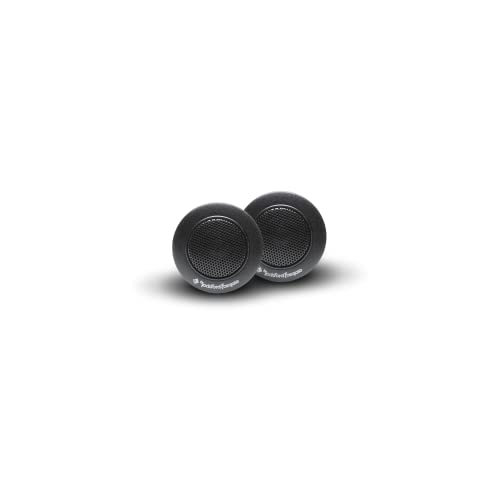
Rockford Fosgate Prime R1T-S 1" Tweeter Kit (Pair) | Includes Integrated High-pass Crossovers and Flush, Surface and Angle Mounting Options


As an Amazon Associate we earn from qualifying purchases. Product prices and availability are accurate as of the date/time indicated.
Rockford Fosgate is one of the most familiar names in car audio, and the R1T-S name marks a stand-alone tweeter within the Prime line. It suits anyone adding a high-frequency driver to an existing set of coaxial or component speakers.
- Pro: A stand-alone tweeter lets you add highs to speakers that lack them, without replacing the entire front stage.
- Pro: Buying from a mainstream brand makes matching crossovers, grilles, and speakers from the same series easier.
- Con: A stand-alone tweeter means you must handle mounting, wiring, and crossover decisions yourself.
Skip it if you want a complete plug-and-play speaker set, or if your car has no convenient place to flush-mount or surface-mount a tweeter. It is also a poor fit for anyone unsure how to route wire through door panels or trim.
Dayton Audio ND25FA-6 Tweeter
Dayton Audio sells drivers to hobbyists, and the ND25FA-6 name states a 25 mm dome and a 6 ohm rating. It is aimed more at people who build their own enclosures and pods than at buyers who want a boxed car kit.
- Pro: A 25 mm dome sits in the typical size range for car tweeters, so it can serve as a custom pillar or dash pod driver.
- Pro: A hobby-focused brand tends to offer a wide mix of drivers, which suits experimenters tuning their own system.
- Con: A 6 ohm rating is less common in car amps, so impedance matching needs more thought than with 4 ohm parts.
Skip it if you are not comfortable fabricating mounts, soldering, or building a crossover, since the name does not imply vehicle-ready brackets or hardware.
Hertz Dieci DT 24.3 Tweeter
Hertz is an Italian audio brand known for car speakers, and this Dieci model is a tweeter whose 24 hints at a small dome size. It appeals to listeners who value a refined top end and tight installation spaces.
- Pro: A small dome size usually means a compact body, which makes it easier to place in sail panels or pillar trim.
- Pro: A brand with a long history in car audio often offers matching mid-woofers, simplifying a full front stage.
- Con: Small tweeters need a higher crossover point, which can leave a gap in the midrange if the woofer rolls off early.
Skip it if your current speakers are very basic and you want the simplest possible swap, since a brand-matched midrange often makes the upgrade sound more coherent.
Kicker CS Series Tweeter

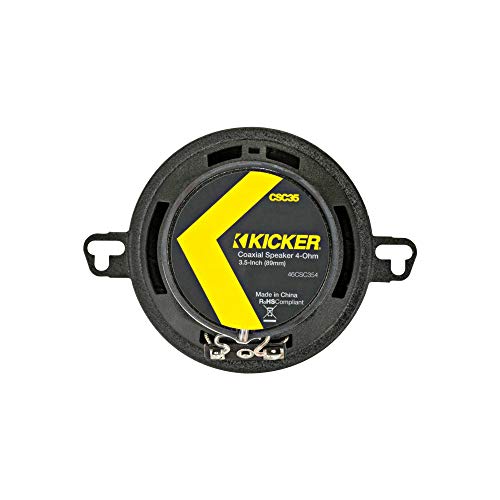
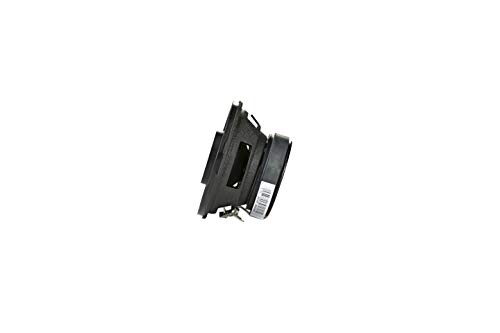
KICKER 46CSC354 CS-Series CSC35 3.5-Inch (89mm) Coaxial Speakers, 4-Ohm (Pair)




As an Amazon Associate we earn from qualifying purchases. Product prices and availability are accurate as of the date/time indicated.
Kicker is widely sold in the car audio aisle, and the CS Series name points to an entry-to-mid tweeter lineup. It makes the most sense as part of a Kicker speaker set instead of as a stand-alone experiment.
- Pro: Matching a tweeter to speakers from the same series simplifies crossover and level decisions for first-time installers.
- Pro: A widely stocked brand means grilles, mounts, and replacement parts are easy to find at most car audio shops.
- Con: A series name does not specify dome size or impedance, so verify both before assuming it fits your mounting spot.
Skip it if you are building an audiophile-tier system with specialist drivers, or if you want a tweeter with a precisely stated dome size and impedance in the name.
Which One Fits
Use these pairings as starting points, then confirm size, impedance, and mounting space before ordering.
- Layering a component upgrade: the JL Audio C2-075ct for its dedicated car audio focus.
- Adding highs to coaxial speakers: the Rockford Fosgate Prime R1T-S as a simple stand-alone driver.
- Custom pillar or dash pods: the Dayton Audio ND25FA-6 for DIY builders.
- Tight mounting spaces: the Hertz Dieci DT 24.3, given its compact class.
- Matching an existing set: the Kicker CS Series Tweeter within the same series.
Common Mistakes
- Wiring a tweeter directly to an amp channel with no crossover or capacitor, which can damage the dome.
- Buying before measuring the available opening and depth behind the trim panel.
- Mixing a very sensitive tweeter with low-sensitivity door speakers and letting the highs dominate.
- Aiming tweeters at the floor or the windshield glass instead of toward the listener.
- Skipping dome material, and choosing a bright metal dome for a car that already sounds harsh.
FAQ
Do I need a tweeter if my door speakers are coaxial?
Not necessarily, because coaxial speakers already include one. A separate tweeter is mostly for component sets or for repositioning the highs higher in the cabin. Adding one to a coaxial set is possible, but it needs its own crossover and careful level matching.
Where is the best place to mount a car tweeter?
Dash corners, sail panels, and A-pillars usually deliver a more even stage than door mounts. Aim them across the cabin when possible. A slight upward angle often works better than a straight-on aim, especially in cars with low seating positions.
What size are most car tweeters?
Many are 0.75 to 1 inch, often listed as 19 to 25 mm. Measure your opening and depth before you buy. A quick paper template held against the trim panel will confirm the fit before any parts arrive.
Should I upgrade tweeters or the head unit first?
Both matter, but speakers usually make the bigger audible difference. Plan on a few weeks of listening to judge changes fairly. If you also carry gear for weekends, pairing a sound upgrade with ATV loading systems for the trip gives your truck a complete setup.
Will better tweeters help road-trip comfort?
Clearer highs reduce listening fatigue, and good seating helps too. Many drivers pair audio upgrades with lumbar support cushions for car seats to make long drives easier.